Doses studied · research context
KLOW dosage context: composition, clearance and why no blend dose is validated
The canonical 80 mg vial, the four very different half-lives inside it, and the reasons a single number for 'a KLOW dose' does not exist.
The short version
There is no validated KLOW peptide dosage for people. This page is about research context, not instructions — it does not tell you how much to use. The one fixed figure is the makeup of the canonical research vial: 80 mg total, made of GHK-Cu 50 mg, BPC-157 10 mg, TB-500 10 mg and KPV 10 mg, mixed with bacteriostatic (preservative) water for lab handling. The four ingredients clear from the body at very different speeds, so there is no clean way to keep all four at the same level from one shot. That mismatch, plus the fact that the blend has never been dose-tested in any study, is why no honest source can give a 'KLOW dose.' Below: the composition, the half-life picture, handling notes, and the gap in human data.
What is in the canonical 80 mg vial
The most widely listed research-vial composition across independent compounders is an 80 mg total: GHK-Cu 50 mg + BPC-157 10 mg + TB-500 10 mg + KPV 10 mg, reconstituted with bacteriostatic water [1]. GHK-Cu is mass-dominant at about 62.5% of the vial, which is the chemical reason the blend carries a notable copper load and why the reconstituted solution can look blue. No validated human dosing exists for the blend, and the component-level research doses differ widely by species and route — they are not additive into a single 'KLOW dose.' Those component figures appear in the four-peptide blend research.
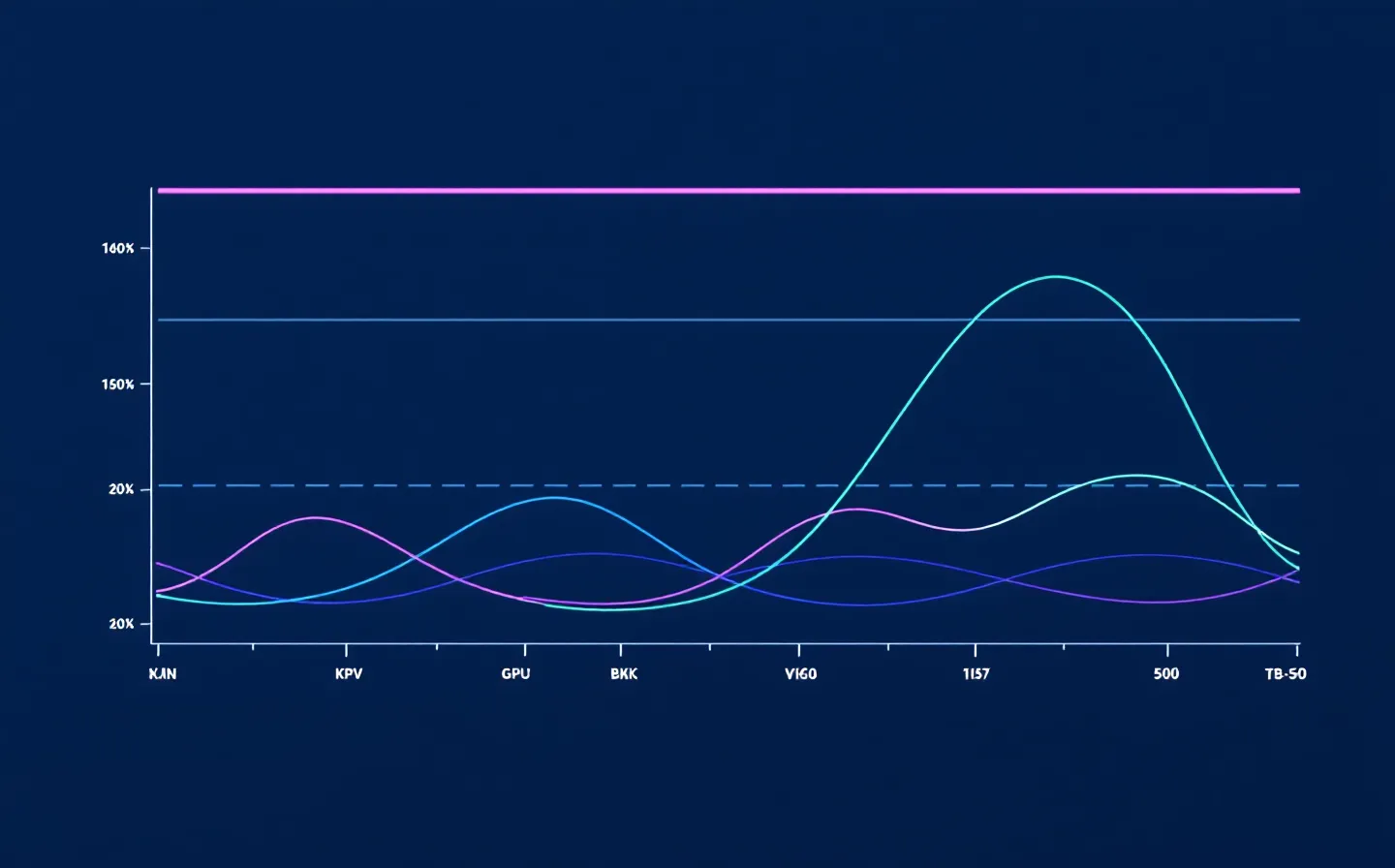
The pharmacokinetic mismatch inside one vial
The four peptides have markedly different reported half-lives. The tripeptides KPV and GHK-Cu clear far faster than the larger BPC-157, whose elimination half-life is under about 30 minutes in the formal pharmacokinetic study [7]. TB-500, the short fragment, behaves differently from full-length native thymosin beta-4, whose human half-life increased with dose across a Phase 1 study [14]. Put together, these differences mean a single co-formulated dose cannot hold all four components at matched exposures — a structural limitation of any fixed-ratio blend, not a tuning problem to be solved. It is one of the clearest reasons the combination is best treated as untested rather than as a refined protocol.
Routes studied and handling notes
Component research spans several routes: subcutaneous handling for the blend, plus topical for GHK-Cu, oral and targeted-delivery for KPV and BPC-157, and intra-articular for BPC-157 in animal models [3][16]. The lyophilized (freeze-dried) blend is reconstituted and the solution typically refrigerated. The copper(II) in GHK-Cu can participate in redox chemistry, which raises a theoretical compatibility consideration when it is co-dissolved with three other peptides in one vial — this has not been formally characterized for the mixture [4]. None of this constitutes human dosing guidance; it is laboratory-handling context drawn from the component literature.

Human clinical data for the blend: none
There is no human clinical data for the four-peptide blend at all [1]. Component human data are limited and uneven: GHK-Cu has topical cosmetic and wound data [4]; BPC-157 rests on a 2025 IV safety pilot and a small case series [13][16]; thymosin beta-4 (not the TB-500 fragment) has early-phase trials [14]; and KPV human data are restricted to delivery pilots and an inflammatory-bowel-disease program lineage [3]. The practical takeaway is the same one this whole site returns to: the ingredients have partial records, the blend has none, and any 'dose' figure for KLOW as a product is unverified. For who should be most cautious, see KLOW peptide side effects.